X5 Tech, Nord Clan and Bühler show how neural networks reject packaging and carcasses in the flow: accuracy up to 99%, payback about 20 months.
Food producers are moving from spot checks to continuous visual inspection: cameras on the conveyor analyse every unit and a neural network sends a signal to the rejection device. According to an industry review published on 22 October 2026, such systems have left the pilot stage and now run on real lines — from ready-meal kitchens to poultry plants and grain processing.
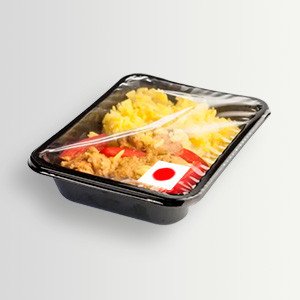
Ready-meal kitchens: more than 95% of packaging defects. The computer vision competence centre at X5 Tech reported a pilot in May 2026 at a partner's ready-meal kitchen. Cameras assess the quality of the sealing seam — a key parameter for products packed in an oxygen-free environment — and check the marking: the EAN-13 barcode and DataMatrix code, the correctness and position of the data. According to the company, the system detects more than 95% of defects, and the reduction of returns from stores is estimated at 80–90%.
"Packaging defects are first of all a matter of quality and food safety, not just appearance. AI removes the human factor and makes control more effective without interfering with production," said X5 food safety director Elena Krupskaya.
Poultry plant: 7,000 carcasses a day. Russian developer Nord Clan deployed its ML Sense complex at the Chamzinskaya poultry farm (agro-group "Khoroshee Delo", one of Russia's top-10 poultry meat producers). Two cameras shoot carcasses from different sides, and the algorithm detects cuts, bruises and other damage. The system handles about 7,000 carcasses per day with 99% defect detection accuracy, and the results go to an automatic rejection device. Previously the operation was done by staff.
- about 7,000 carcasses a day on the Chamzinskaya conveyor;
- 99% — stated ML Sense defect detection accuracy;
- 5,000 images collected to train the model;
- more than 95% of packaging defects detected by the X5 Tech system;
- 80–90% — estimated reduction of returns from stores.
The Chamzinskaya deployment required no conveyor stoppage or replacement of existing equipment, and the frames were made of stainless steel. The system is included in the national software registry.
Optical grain sorting. Swiss Bühler presented the SORTEX AI700 optical sorter in 2025: deep learning algorithms separate wheat, barley and rye grains from oats intended for gluten-free products. In September 2026 the company reported that the machine is used at oat processing plants. The economic point is not only to find impurities but also not to send good raw material to waste together with them.
Abroad, Italian Specialvideo has built a solution on Ultralytics YOLO neural models that counts ingredients on a pizza and detects uneven distribution: recognition accuracy up to 99%, with one pizza analysed in less than 250 ms against a 600 ms production cycle. Mexican La Próxima Estación installed two KEYENCE IV4 smart vision sensors that detect foreign inclusions and off-colour product and linked them to the removal mechanism itself. US-based Oxipital AI reports a pilot of its OX1 system at a frozen pizza plant with estimated savings of more than $100,000 a year per line (a vendor forecast).
The economics. In a scenario calculation, a line produces 50,000 packs a day, and early detection plus process tuning cut the share of product with irrecoverable losses from 1% to 0.4%. With preventable losses of 40 roubles per unit and 250 working days, the annual effect is 3 million roubles. If equipment, software and integration cost 4 million roubles and support 600,000 roubles a year, simple payback is about 20 months. This is a scenario estimate, not a market average.
What blocks scaling. The main barrier is not the camera but data quality and integration with production: the neural network must be trained on the defects of a specific line, re-checked when lighting, assortment and packaging change, and assessed for misses and false rejects. Cameras do not replace laboratory tests: microbiological contamination and many internal defects cannot be reliably detected by an ordinary camera.
"The main effect appears where video control is linked to process control: the system not only removes defects but shows after which equipment adjustment their number grew," said Ilnur Khasanov, associate professor at the Financial University under the Government of Russia.
According to associate professor Alexei Chernyakov, such systems change the organisation of control: specialists move from constant watching of the conveyor to checking disputed cases, analysing deviations and setting quality standards. Responsibility for food safety remains with the enterprise.
The bottom line: the advantage goes not to the plant with more cameras, but to the one that turns visual inspection results into lower losses, stable quality and manageable costs.
Source: Vedomosti