January 27, 2025

Scientists at Perm Polytechnic Discover Innovative Method for Recycling Tetra Pak Carton Packaging

Food

Scientists from Perm National Research Polytechnic University (PNRPU) have found a way to process the cardboard part of Tetra Pak packaging to obtain powdered cellulose from it. This approach will expand the scope of secondary applications of packaging material in many industries.

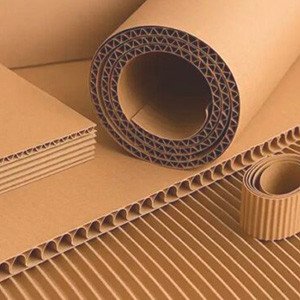
Tetra Pak is not a biodegradable material, so the issue of its eco-friendly recycling is acute worldwide. A large part of it, about 75%, consists of fibers (cardboard), 20% is polyethylene film, and 5% is aluminum foil. While there are more options for recycling plastic and metal mixtures, the cellulose fiber of Tetra Pak packaging is considered low-quality waste due to the presence of adhesive substances or coatings, limiting its reuse. In Russia, only a few enterprises can recycle this type of packaging using a wet method to separate fractions from each other and recycle wastepaper into corrugated cardboard, paper bags, and new paper fibers.

Scientists at Perm Polytech investigated the possibility of recycling the fibrous part of Tetra Pak packaging by obtaining powdered cellulose from it. This is a lightweight bulk material mainly derived from wood and other plant materials. Its use is relevant for manufacturing pharmaceuticals, toothpaste, creams, and food products. It is also used as an absorbent and filtering material and in producing high-strength and thermally stable materials.

For the research, the polytech scientists used the fibrous part of Tetra Pak packaging obtained through dry separation in a previously developed aerodynamic device. Using a directed air stream, the device grinds wastepaper into individual fibers without destroying their structure.

"In accordance with the requirements for food-grade powdered cellulose, one of the most important parameters is the product's brightness. To improve the quality indicators of the obtained fiber, we conducted bleaching using chemical reagents according to a specially developed scheme. As a result, the brightness reached 80%, which meets the technical specifications for fibers used in making food-grade powdered cellulose," says Olga Noskova, Associate Professor of the Department of Polymer Materials and Propellant Technology at PNRPU and Candidate of Technical Sciences.

The polytech scientists obtained powdered cellulose from bleached fibers using acid hydrolysis, which involves breaking down complex compounds into simpler ones using hydrochloric acid. They determined the quality indicators of the resulting product: sorption (absorption) capacity, water retention, degree of polymerization, bulk density, and fractional composition.

"The results showed the possibility of using the obtained powdered cellulose in the food, pharmaceutical, and medical industries. By all indicators, it meets the standards and does not fall short in quality compared to the product obtained from natural wood cellulose," shared Olga Noskova.

The research by scientists from Perm Polytech demonstrated that recycling Tetra Pak packaging into powdered cellulose is a promising and viable method for recycling multilayer non-degradable material. Implementing this technology in practice will significantly reduce the amount of such waste and expand its secondary application scope in domestic industry.


Source: BUMPROM

Latest posts by email:
To subscribe to the newsletter, first Come in Either Register

Other news

Pharma

In today’s world, effective resource management is becoming an increasingly crucial aspect of successful business operations. This is especially true for industries where equipment plays a key role—such as pharmaceuticals, cosmetology, and the food industry.

02.10.2025
Food

JSC "Packaging" Packaging Systems, the largest Russian manufacturer of aseptic cardboard packaging (formerly the Russian "subsidiary" of Tetra Pak), intends to increase the capacity of the plant in Lobnya, Moscow region, by 50% — from 4 to 6 billion packages per year. The total investment in the project for 2024-2027 will amount to about 6 billion rubles, and the expansion is scheduled to be completed by the end of 2027.

16.09.2026
Cosmetic

The Russian full-service cosmetics company ESTILAB has invested about 200 million rubles in the relocation of the production site from Khimki to the Dubna science city. A new high-tech complex with an area of 6500 square meters. m will start operating at full capacity in November, increasing annual production for the ICON SKIN and DE_CODE brands from 3 to 5 million units.

16.09.2026
Pharma

PJSC "Biosynthesis", one of the largest pharmaceutical enterprises in the Penza region, is preparing to launch a reconstructed production site for tablet dosage forms. The volume of investments in the project is 350 million rubles, and the implementation will increase the production of drugs, including those included in the list of VED.

16.09.2026
Cosmetic

Glaspray, a manufacturer of cosmetic packaging, has introduced a patented innovation — a one-piece bottle with a dispenser made entirely of polyethylene terephthalate (PET) monomaterial. The new product is designed for reusable and waste-free recycling.

15.09.2026
Pharma

Pharmaceutical manufacturer "Nizhpharm" announced the launch of a new line of packaging and packaging of soft dosage forms. The volume of investments in the project amounted to 158 million rubles, the maximum speed of the equipment reaches 270 packages per minute, which will increase production by 50%.

15.09.2026
Food

High-tech production of aluminum cans for the beer and alcohol industry has been launched in the Voronezh special economic zone "Center". The "Alba Voronezh" plant was built in just 11 months with an investment of about 12 billion rubles and is already reaching a capacity of up to 4 thousand cans per minute. This is one of the key steps towards import substitution of packaging in the Russian food industry.

14.09.2026
Cosmetic

In Solnechnogorsk (Moscow region) A new production complex of the cosmetics company "Mixit" has been opened with a full production cycle: from formula development to packaging. Investments in the project amounted to 1.4 billion rubles, and the capacity allows to produce up to 14 million units of cosmetic products per month — twice as much as now.

14.09.2026
Cosmetic

By the end of 2024, the volume of the Russian cosmetics, perfumes and body care products market reached ₽1.11 trillion, showing an increase of +16.8%. At the same time, the production of domestic products increased by 16% to almost 464 thousand tons, and the number of local producers doubled in three years, exceeding 800 companies.

08.09.2026
Food

EXPOCENTRE JSC has announced the dates of the main industry event for the food and processing industry: the 31st International exhibition Agroprodmash-2026 will be held from September 28 to October 1, 2026 at the Moscow Crocus Expo IEC. The organizers promise a record scale — more than 930 companies from 21 countries and over 27,000 professional visitors.

08.09.2026
Cosmetic

Jiusu Technology Shanghai, a Chinese packaging manufacturer, announced that French premium cosmetics and skincare brand Galénic has selected Jiusu's precision packaging for its N°3 VB Serum.

31.07.2026
Pharma

Gerresheimer, a German company specializing in glass, specialty glass, and plastic packaging for the pharmaceutical, cosmetic, and food industries, announced the commissioning of a new plant in Zhenjiang, China.

27.07.2026