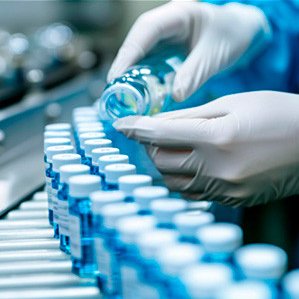
The first two lines of Europe's largest radiopharmaceutical manufacturing plant, the first of its kind in Russia, have been launched in Obninsk.
The Kaluga Region continues to strengthen its status as one of the main pharmaceutical hubs in the country. The first two lines of Europe's largest radiopharmaceutical manufacturing plant have been put into operation in the Obninsk science city. This is the first such production in Russia — the volume of investments in the project reaches almost 9 billion rubles.
The enterprise is being built jointly with the state corporation Rosatom and is being built in strict accordance with the international rules for the production and quality control of medicines GMP, which guarantees the safety of production and use of dosage forms. The plant is currently undergoing commissioning work, which will end with the release of test batches of products and quality control.
As noted in the materials of the regional government, the company's output to its design capacity in 2028 will make it possible to remove the dependence of domestic medicine on imported radiopharmaceuticals used to diagnose and treat a number of oncological, cardiovascular and neurodegenerative diseases.
"This is one of the industries that shapes the region's economy. The bet on economic diversification proved the correctness of such a policy when the Kaluga auto cluster collapsed. At that time, the pharmaceutical industry became one of the tractors," said Pavel Grankov, General Director of the regional Agency for Innovative Development.
The company will produce a wide range of radiopharmaceuticals and active pharmaceutical substances, including the most popular products based on isotopes iodine-131, samarium-153, molybdenum-99, as well as promising preparations based on lutetium-177, actinium-225 and radium-223.
- The volume of investments in the plant is about 9 billion rubles;
- The growth of industrial production in the pharmaceutical sector of the region in the first half of 2026 — 46%;
- The pharmaceutical cluster unites about 70 enterprises producing more than 250 names of finished medicines;
- From 2011 to 2025, production volumes in the cluster increased 20—fold, from 5 to 100 billion rubles;
- The main customers of the products are the regions of Russia, the CIS, BRICS, Asia and Africa.
Other cluster projects are developing in parallel. Thus, the Obninsk Chemopharm plant of the Nizhpharm Group has launched a new production line for the production of a two-layer tablet for the treatment of type 2 diabetes. The launch required investments of 812 million rubles, of which 116 million went to purchase modern equipment.
Pharm-Sintez is building a pharmaceutical substances and drugs manufacturing plant in Borovsk, a large—scale project worth 16 billion rubles with full completion in 2031. Pharmasynthesis-Medtech, Russia's first plant of equipment and consumables for dialysis, is due to open this year with investments of about two billion rubles.
At the signing of the St. Petersburg International Economic Forum 2026, Pharm Aid LTD announced a pharmaceutical complex in the Vorsino Industrial Park with a design capacity of 20 million units of drugs per year, and the Chumakov Polio Institute will build a world-class vaccine production complex in the Kaluga special economic zone with investments of 5.5 billion rubles.
Thus, the Kaluga pharmaceutical cluster is steadily moving from import independence to export leadership, and the launch of the first lines of the radiopharmaceutical plant is becoming an important milestone in ensuring the availability of vital medicines for Russian medicine.
Source: Rossiyskaya gazeta